 1.
Indigenous Women
Empowerment through IGA
1.
Indigenous Women
Empowerment through IGA
Bangladesh Social Service (BSS),
through its Indigenous Women Empowerment project, has been implementing
various income-generating initiatives to promote the socio-economic empowerment
of indigenous and ethnic minority women. Under this project, activities are
being implemented in the northern region of Bangladesh, specifically in
Dinajpur, Naogaon, and Rajshahi districts, covering 8 upazilas, 80
community-based groups, and benefiting a total of 1,750 indigenous women.
Indigenous women in these areas have
long remained socially and economically marginalized, and their limited participation
in income-generating activities has confined them to marginal income levels. To
address this challenge, BSS has introduced small-scale livestock initiatives,
including goat, duck, and poultry rearing, to integrate indigenous women into
sustainable livelihood opportunities.
The project provides women
beneficiaries with practical, hands-on training in livestock management,
covering animal husbandry techniques, feeding and health management, breeding
practices, and disease prevention. These skills enable women to manage
livestock efficiently and sustainably, ensuring productive and profitable
outcomes.
Through the rearing and sale of milk,
eggs, and meat, beneficiaries generate additional household income, reducing
financial dependency and strengthening economic resilience. Many women have
also formed savings groups and cooperatives, promoting financial inclusion,
collective bargaining, and financial literacy within their communities.
In addition, the livestock initiatives
contribute significantly to household nutrition and food security by ensuring
access to protein-rich foods such as eggs, milk, and meat. Improved nutrition
positively impacts children’s growth, maternal health, and overall family
well-being. Participation in these income-generating activities further
enhances women’s confidence, leadership, and decision-making capacity,
increasing their recognition and status within both family and community
structures.
Overall, BSS’s livestock-based
interventions play a vital role in reducing poverty, empowering indigenous
women socially and economically, and integrating marginalized communities into
the broader national development agenda. By fostering sustainable livelihoods
and inclusive growth, the project contributes meaningfully to Bangladesh’s
goals of equitable and inclusive national development.
2.
Disaster Management and
Climate Change Project
The Disaster Management and Climate
Change Project is designed to address the increasing vulnerabilities of
disaster-prone and climate-sensitive communities in Bangladesh. The project is
implemented by Bangladesh Social Service (BSS) with financial support
from Kerk in Actie, aiming to strengthen community resilience through
capacity building, disaster risk reduction, and sustainable environmental
practices. Its overarching objective is to enhance institutional and social
capacities for effective disaster risk management while establishing a
long-term foundation for climate change adaptation.
The project is implemented in the northern
region of Bangladesh, covering four upazilas of Dinajpur district, as well
as in two upazilas of Cox’s Bazar district, both of which are highly
vulnerable to climate-induced disasters. Under this initiative, 650 women
are directly engaged as beneficiaries, ensuring strong participation of
women in disaster preparedness, environmental management, and community
resilience-building efforts.
A key component of the project is disaster
preparedness and risk reduction training. Beneficiaries receive
comprehensive training on early warning systems, disaster risk identification,
safe shelter selection, and household-level contingency planning. These
trainings enable communities to anticipate hazards, prepare proactively, and
minimize losses during emergencies.
The project also emphasizes emergency
response and rescue operations. Community members are trained in first aid,
safe evacuation, rescue procedures, and volunteer coordination. This practical
training has significantly improved rapid response capacity and coordination at
the community level.
In addition, the project promotes climate
change adaptation and sustainable livelihoods, particularly in the northern
region. Participants receive training on climate-smart agriculture, efficient
water use, environmentally friendly practices, and sustainable natural resource
management to support resilient livelihoods.
Furthermore, women-led self-help
groups are formed to advance environmental conservation, waste management,
and social inclusion. Training on waste segregation, compost production,
recycling, and tree plantation initiatives enhances environmental awareness
while strengthening women’s leadership.
Overall, the project has successfully
built inclusive, resilient, and self-reliant communities, significantly
improving preparedness and adaptive capacity to face future climate-related
challenges.
3.
Promotion of Human
Rights for Ethnic Communities in North Bengal
The Women’s
Rights Project is designed to address the persistent challenges faced by
women from ethnic and marginalized communities, particularly social exclusion,
limited access to basic services, and inadequate recognition of fundamental
rights. Implemented in Nilphamari, Joypurhat, and Bandarban districts,
the project covers 8 upazilas and is being carried out with the active participation
of 1,200 women beneficiaries. The initiative seeks to promote human
rights awareness, social inclusion, and equitable development while ensuring
that women’s voices are recognized within their families, communities, and
local governance structures.
The
core objective of the project is to strengthen awareness of women’s human
rights, emphasizing dignity, equality, and social justice. It addresses
critical gaps in access to education, healthcare, land and inheritance rights,
and civic participation that disproportionately affect women from ethnic
communities. By enhancing rights-based knowledge, the project empowers women to
claim and protect their entitlements.
Community-based
awareness sessions are conducted using simple and culturally sensitive
approaches to ensure accessibility and understanding among diverse ethnic
groups. These sessions focus on constitutional rights, minority protections,
women’s legal rights, land ownership and inheritance, and access to public
services. The participatory nature of the sessions encourages open discussion
and collective learning.
The
project places strong emphasis on capacity building and leadership
development. Training programs are organized for women leaders and youth
representatives to enhance leadership, advocacy, and community mobilization
skills. This enables women to engage confidently with local government
institutions and service providers.
Gender
equality and social inclusion are
central to the project design. Special attention is given to protecting women
from discrimination and violence, while promoting their participation in
decision-making processes at the household and community levels.
In
addition, community dialogue and networking sessions are facilitated
between ethnic women, local authorities, and service providers to build trust,
reduce discrimination, and promote inclusive governance.
Through
empowerment, awareness, and leadership development, the Women’s Rights Project
contributes to long-term social cohesion, reduced marginalization, and improved
access to rights-based services, ensuring sustainable and inclusive development
for ethnic women communities.
4. Awareness Program for Parents
The Common
Awareness Program on Underage Mobile Use and Harmful Digital Impacts has
been developed in response to the rapid expansion of digital technology and the
growing concern over excessive and unsupervised mobile phone use among
children. While digital devices offer educational and social benefits,
uncontrolled exposure poses serious risks to children’s mental health, academic
performance, online safety, and overall well-being. This program seeks to build
awareness and promote a balanced, responsible digital culture among children,
parents, and communities.
The
primary objective of the program is to raise awareness about the risks
associated with underage mobile and digital device use and to encourage
responsible digital behavior. Under this initiative, the program has been
implemented across 6 upazilas in 2 districts, directly reaching 900
participants and indirectly benefiting an additional 3,600 individuals
through community dissemination and shared learning.
A key
component of the program is interactive awareness sessions for children.
These sessions use age-appropriate and engaging methods to educate children on
healthy screen-time management, the dangers of digital addiction,
cyberbullying, online privacy, and safe internet practices. The aim is to
empower children with knowledge and critical thinking skills so they can navigate
digital spaces safely and responsibly.
The
program also places strong emphasis on parental guidance and capacity
building. Parents are trained on digital parenting strategies, including
screen-time regulation, content supervision, and creating positive digital
environments at home. By enhancing parental awareness, the program strengthens
the protective role of families in children’s digital lives.
School
and community engagement is another vital aspect of the
initiative. Collaboration with teachers, school authorities, and community
leaders helps integrate digital well-being messages into educational activities
and community platforms, ensuring wider outreach and sustained impact.
Additionally,
the program addresses the mental health and behavioral impacts of
excessive mobile use. Discussions focus on issues such as sleep disruption,
reduced concentration, emotional imbalance, and weakened social interaction,
encouraging early prevention and healthy lifestyle choices.
Overall,
the program promotes a responsible and balanced digital culture by
fostering awareness, self-regulation, and positive online engagement. Through
collective action involving children, parents, schools, and communities, the
initiative contributes to building safer, healthier, and more supportive digital
ecosystems for children in an increasingly connected world.
5.
Bangladesh Social
Service (BSS) – Participatory Monitoring Training
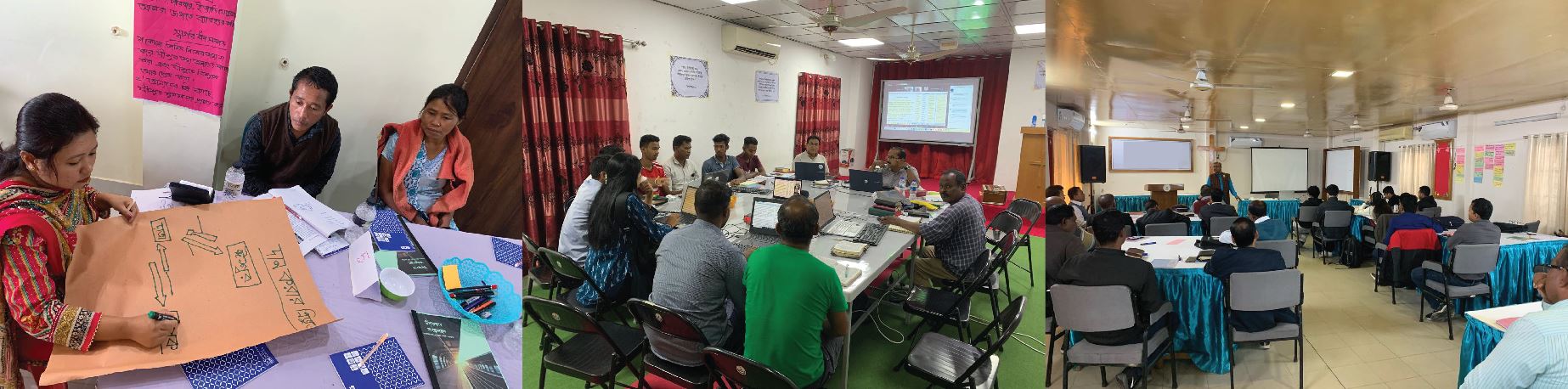
Bangladesh Social
Service (BSS) organized a five-day residential “Participatory
Monitoring” training for 30 staff members from its 10 area
offices under the Capacity Building Program to strengthen institutional capacity and enhance the
effectiveness of its ongoing projects. The training aimed to develop staff
skills in planning, monitoring, and evaluation through participatory
approaches, ensuring projects are implemented efficiently, transparently, and
with tangible impact. The key components of the training are outlined below:
a)
Concept
and Methodology of Participatory Monitoring : Participants were introduced to the fundamental
principles, objectives, and philosophy of participatory monitoring. They
learned how to integrate data-driven and results-oriented approaches into
planning and implementation, enabling reliable assessment of project outcomes
and impact.
b)
Data
Collection and Analysis Techniques: Staff acquired practical skills in using logical frameworks, setting
indicators, collecting and analyzing data, conducting field visits, and
applying monitoring tools. These competencies enable precise tracking of
project progress and informed decision-making.
c)
Stakeholder
Engagement and Feedback Mechanisms: The training emphasized ensuring active participation of beneficiaries,
effective communication with local communities and stakeholders, and the
integration of feedback mechanisms to improve project design and
implementation.
d)
Leadership
and Problem-Solving Skills:
Through group work, case studies, and practical exercises, participants
enhanced their leadership, problem identification, and participatory
decision-making skills, enabling them to respond proactively to challenges in
the field.
e)
Contribution
to Project Implementation:
Trained staff are now better equipped to monitor ongoing BSS projects, identify
issues promptly, ensure transparency, and make evidence-based decisions. These
capacities directly strengthen project effectiveness, accountability, and
sustainability.
Overall, this
participatory monitoring training represents a strategic investment in BSS’s
human resources and project management capacity, ensuring that the
organization’s interventions are more effective, inclusive, and sustainable in
achieving its development objectives.
6.
Bangladesh Social Service (BSS) – Annual Planning and
Implementation Strategy Training (2025)
At the beginning of 2025, BSS organized a comprehensive five-day training on
“Annual
Planning and Implementation Strategies” for its core staff
and heads of all area offices. The training was designed to
enhance organizational efficiency, strengthen strategic project management, and
ensure effective execution of BSS’s development programs. The key content and
outcomes of the training are as follows:
a) Strategic
Planning and Goal Setting: Participants learned how to
formulate annual
plans aligned with organizational objectives, set realistic
targets, prioritize activities, and allocate resources efficiently. Training
modules included logical frameworks, results-based planning, and aligning
projects with national and organizational development goals.
b) Project
Implementation Techniques : Staff acquired practical skills
for translating plans into action, including task scheduling, workflow
management, risk mitigation, and monitoring progress.
Techniques for adaptive management and field-level problem-solving were also
emphasized to ensure timely and effective project delivery.
c)
Data-Driven Decision Making and
Monitoring : The training covered methods for evidence-based
decision making, setting performance indicators, and systematic
progress tracking. Staff learned to collect, analyze, and interpret data to
guide project adjustments and improve outcomes.
d) Leadership,
Coordination, and Team Management: Participants enhanced
leadership, coordination, and team management skills, learning to motivate
staff, communicate objectives clearly, and collaborate across departments and
area offices for cohesive implementation of annual plans.
e) Impact
and Organizational Significance
·
Strengthens alignment between organizational strategy and
field-level execution.
·
Improves accountability and transparency in resource allocation
and project monitoring.
·
Enhances staff capacity to anticipate challenges and implement
adaptive solutions.
·
Promotes uniformity in planning and reporting across all area
offices.
·
Contributes to more effective, results-oriented, and sustainable
development interventions.
This training ensures that BSS core staff and area office heads are equipped with the skills, strategies, and leadership capacity required to translate annual plans into effective, measurable, and sustainable action, thereby significantly improving the impact and efficiency of the organization’s development initiatives.