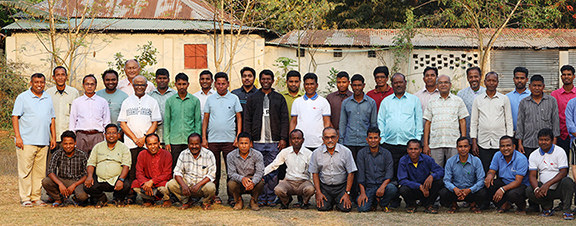
Bangladesh Social
Service (BSS) organized a five-day residential “Participatory
Monitoring” training for 30 staff members from its 10 area
offices under the Capacity Building Program to strengthen institutional capacity and enhance the
effectiveness of its ongoing projects. The training aimed to develop staff
skills in planning, monitoring, and evaluation through participatory
approaches, ensuring projects are implemented efficiently, transparently, and
with tangible impact. The key components of the training are outlined below:
a)
Concept
and Methodology of Participatory Monitoring : Participants were introduced to the fundamental
principles, objectives, and philosophy of participatory monitoring. They
learned how to integrate data-driven and results-oriented approaches into
planning and implementation, enabling reliable assessment of project outcomes
and impact.
b)
Data
Collection and Analysis Techniques: Staff acquired practical skills in using logical frameworks, setting
indicators, collecting and analyzing data, conducting field visits, and
applying monitoring tools. These competencies enable precise tracking of
project progress and informed decision-making.
c)
Stakeholder
Engagement and Feedback Mechanisms: The training emphasized ensuring active participation of beneficiaries,
effective communication with local communities and stakeholders, and the
integration of feedback mechanisms to improve project design and
implementation.
d)
Leadership
and Problem-Solving Skills:
Through group work, case studies, and practical exercises, participants
enhanced their leadership, problem identification, and participatory
decision-making skills, enabling them to respond proactively to challenges in
the field.
e)
Contribution
to Project Implementation:
Trained staff are now better equipped to monitor ongoing BSS projects, identify
issues promptly, ensure transparency, and make evidence-based decisions. These
capacities directly strengthen project effectiveness, accountability, and
sustainability.
Overall, this participatory monitoring training represents a strategic investment in BSS’s human resources and project management capacity, ensuring that the organization’s interventions are more effective, inclusive, and sustainable in achieving its development objectives.
At the beginning of 2025, BSS organized a comprehensive five-day training on
“Annual
Planning and Implementation Strategies” for its core staff
and heads of all area offices. The training was designed to
enhance organizational efficiency, strengthen strategic project management, and
ensure effective execution of BSS’s development programs. The key content and
outcomes of the training are as follows:
a) Strategic
Planning and Goal Setting: Participants learned how to
formulate annual
plans aligned with organizational objectives, set realistic
targets, prioritize activities, and allocate resources efficiently. Training
modules included logical frameworks, results-based planning, and aligning
projects with national and organizational development goals.
b) Project
Implementation Techniques : Staff acquired practical skills
for translating plans into action, including task scheduling, workflow
management, risk mitigation, and monitoring progress.
Techniques for adaptive management and field-level problem-solving were also
emphasized to ensure timely and effective project delivery.
c)
Data-Driven Decision Making and
Monitoring : The training covered methods for evidence-based
decision making, setting performance indicators, and systematic
progress tracking. Staff learned to collect, analyze, and interpret data to
guide project adjustments and improve outcomes.
d) Leadership,
Coordination, and Team Management: Participants enhanced
leadership, coordination, and team management skills, learning to motivate
staff, communicate objectives clearly, and collaborate across departments and
area offices for cohesive implementation of annual plans.
e) Impact
and Organizational Significance
·
Strengthens alignment between organizational strategy and
field-level execution.
·
Improves accountability and transparency in resource allocation
and project monitoring.
·
Enhances staff capacity to anticipate challenges and implement
adaptive solutions.
·
Promotes uniformity in planning and reporting across all area
offices.
·
Contributes to more effective, results-oriented, and sustainable
development interventions.
This
training ensures that BSS core staff and area office heads are equipped with
the skills,
strategies, and leadership capacity required to translate annual
plans into effective, measurable, and sustainable action, thereby significantly
improving the impact and efficiency of the organization’s development
initiatives.